
Golf Near the Nest
Broward County has 50-plus courses, most within 30 minutes of Fort Lauderdale. Where to play a good-value public round near the nest.
- Courses in the areaMore than 50
- Most withinAbout 30 minutes
- Best public valuePlantation Preserve, ~20 min
- Typical public green feeRoughly $30-$130, by course and season
- Best forWalk-up public rounds, all levels
- BookPro shop or a tee-time site
- Best tee timeEarly morning, especially in summer
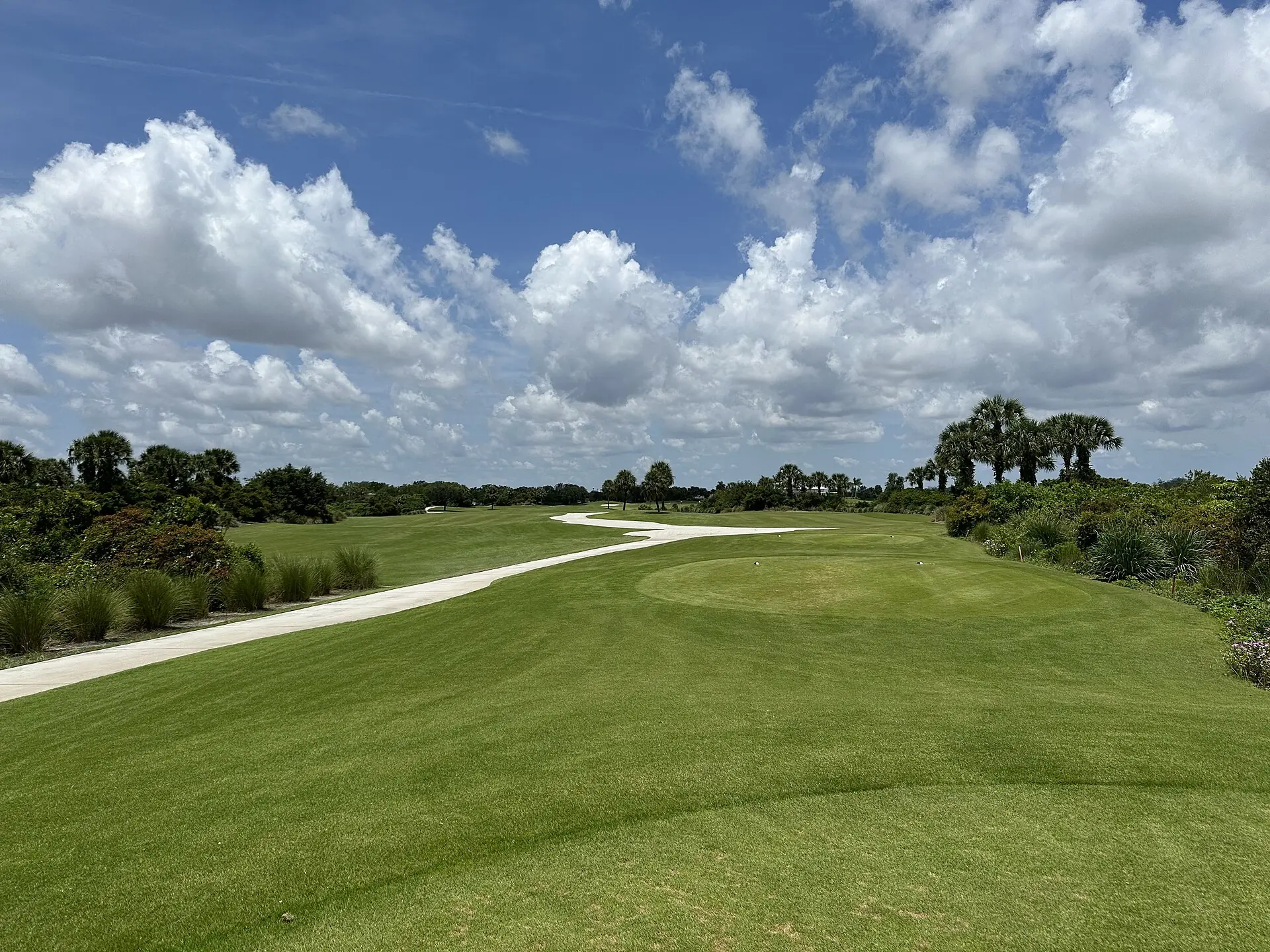
Photo: 2nd hole at Osprey Point Golf Course by Gatorfan252525, CC BY-SA 4.0, via Wikimedia Commons (cropped)
Broward County is golf country. There are more than fifty courses in the area, most of them within about thirty minutes of downtown Fort Lauderdale, and a good share are public daily-fee tracks you can book without a membership. If a round is on the agenda, you have plenty of choice — and most of it is a short drive from the nest.
The lay of the land
South Florida golf clusters where the land was flat, drainable, and cheap to build on decades ago, which in Broward means a broad arc west and north of the city. The densest concentration sits between Plantation, Tamarac, Coral Springs, Pompano Beach, and Hollywood. From Turtle Nest Bungalow in the Lakeridge area, you are more or less in the middle of that arc: twenty minutes gets you to several of the better public courses, and even a bucket-list round down in Miami is inside an hour on a good traffic day.
The courses themselves come in a familiar South Florida style: long, flat, and defended by water, with wetland edges, palms, and enough breeze off the coast to matter on an exposed hole. You will not find dramatic elevation here. What you get instead is warm-season grass that stays green year-round, wildlife that treats the fairways as its own, and open, playable layouts that suit a vacation round more than a punishing test. Bring your camera along with your clubs; a heron standing on the cart path is part of the deal.
The other thing to understand is the split between public, semi-private, and private. Public daily-fee courses take anyone who books a tee time. Semi-private clubs prioritize members but sell open tee times to the public, often at a premium. Private clubs need a member to get you on. The good news for a visitor is that most of the courses worth playing near Fort Lauderdale fall into the first two buckets.
A reliable public pick: Plantation Preserve
Plantation Preserve, run by the City of Plantation, is the course to know if you want one solid, fair-priced round without overthinking it. It is a full-length par-72 municipal course that winds through wetland preserves. It is a certified Audubon sanctuary, so you will very likely share the course with gators sunning on the banks and wading birds working the shallows. Green fees typically run in the $30–$70 range depending on season and tee time, which is strong value for the quality. It is about twenty minutes from the nest.
A couple of things set it apart from the average muni. The turf is a salt-tolerant paspalum grass that gives clean lies and true greens, and the preserve setting means the water hazards are part of a working wetland. There is a practice range and a clubhouse with a grill if you want to eat before or after. Because the city owns it, the booking is straightforward and the staff are used to visitors who have never set foot on the property.
The wider field
Beyond Plantation Preserve, the region runs the full spread from municipal courses to semi-private clubs and resort layouts, so you can dial price and difficulty up or down. Here is how a handful of the better public-access options stack up. Fees move with the season, with winter the peak and summer the cheapest, so treat any number as a ballpark and confirm when you book.
| Course | Where | Character |
|---|---|---|
| Plantation Preserve | Plantation | Par-72 municipal through wetlands; Audubon sanctuary; best all-round value |
| Jacaranda Golf Club | Plantation | 36 holes (East & West); semi-private but sells public tee times; East is the tougher test |
| Pompano Beach Golf | Pompano Beach | 36-hole municipal; the Greg Norman-designed Pines is the marquee layout |
| Colony West | Tamarac | Long, demanding Championship course; one of the sterner public tests around |
| Grande Oaks | Davie | Raymond Floyd redesign framed by old oaks; the Caddyshack course |
| Hollywood Beach | Hollywood | Historic 1920s layout, recently restored; walkable and characterful |
A few notes on that list. Jacaranda is a 36-hole facility in Plantation with an East and a West course; the East is the more demanding of the two. It is semi-private, so it holds tee times back for members but sells the rest to the public, usually at higher fees than the munis. Check the current rate when you book.
Pompano Beach is a 36-hole municipal complex that got a full Greg Norman redesign. The Pines is the longer, more challenging course and the one people talk about; the Palms is the more traditional, walkable partner. Both are city-owned and priced accordingly, which makes the whole complex one of the better public values in the county for the quality of the design.
Colony West in Tamarac is where you go if you want to be tested. The Championship course is long, plays from a demanding set of back tees, and has long had a reputation as one of the harder public tracks in South Florida, with small greens and plenty of bunkering. Play it from a sensible set of tees.
Grande Oaks and the Caddyshack story
Grande Oaks in Davie carries the best backstory of any course in the area. Under its old name, Rolling Hills, it was where much of Caddyshack was filmed in the fall of 1979. The crew picked a stretch without palm trees to stand in for the fictional Bushwood Country Club in a generic Midwest setting. The famous pool scene, though, was shot a few miles away at Coral Ridge Country Club in Fort Lauderdale, which is private and not somewhere you can just wander onto.
The golf course you would play today is not the one from the film. It was redesigned in 1999 by Raymond Floyd, the property was shrunk to a tighter footprint, and it was renamed for the grove of old-growth oaks that frames a number of holes. It plays as an upscale daily-fee course now, so expect fees toward the higher end and a more polished experience than a straight muni. It is roughly half an hour from the nest, and it is worth the drive if you like the idea of playing where a golf movie got made.
A historic round in Hollywood
South of the city, Hollywood Beach Golf Club is one of the oldest courses in the region, having opened to the public in the early 1920s. It sits on the Florida Historic Golf Trail, and for years it was attributed to the architect Donald Ross, though more recent research has cast doubt on that. It is a tree-lined par-70 that recently went through a restoration adding a new clubhouse and expanded practice space, plus a short-course setup for a quicker, more social kind of golf. It is a good pick if you want history and a walkable layout rather than a modern resort test, and it pairs naturally with a day down toward the Hollywood Beach Broadwalk.
If you just want to hit balls
Not every golf outing needs to be four hours and eighteen holes. A few options let you scratch the itch in an hour or two, which is handy if you are splitting the day with the beach or the family.
- American Golfers Club — a Fort Lauderdale course that plays as a short, mostly-par-3 executive layout with a driving range and pro shop. Good for a quick loop, a warm-up, or getting a rusty swing back before a bigger round. It is one of the closest options to the nest.
- Topgolf — the nearest location is down in Miami Gardens, a climate-controlled multi-level range with tracked shots, food, and drinks delivered to your bay. It works as a night out for a group with mixed interest and mixed ability. Reserve a bay ahead on weekends; walk-in waits get long.
- Municipal practice ranges — several of the public courses above, Plantation Preserve and Pompano Beach among them, have practice facilities you can use without playing a full round. Call the pro shop to confirm range hours.
Booking a tee time
Booking here is easy and there is no membership wall on the public courses. You have three main routes:
- The course website or pro shop. Most municipals and daily-fee courses let you book online, and calling the pro shop gets you a person who can tell you what is actually open on your dates and whether any rate specials apply.
- A tee-time aggregator. Sites and apps that pool availability across many courses are the fastest way to compare prices and grab a discounted or twilight slot. They are especially useful if you do not care which course you play and just want the best-value round on a given morning.
- Walk up. In the off-season and midweek you can often just show up, particularly in the afternoon. In peak winter, do not count on it.
Whatever route you take, ask about twilight rates. Most courses drop their fees for tee times in the early afternoon onward, and in the long daylight of the warm months you can still get a full eighteen in before dark at a fraction of the morning price.
When to play
The season shapes both the price and the experience more than anything else. Winter is peak: the weather is close to perfect, snowbirds and members fill the tee sheets, and fees are at their highest. Summer is the opposite: hot, humid, prone to afternoon thunderstorms, and cheap, with the courses at their quietest. Spring and fall split the difference.
| Season | What to expect |
|---|---|
| Winter (Dec–Mar) | Best weather, busiest tee sheets, highest fees. Book ahead, play early. |
| Spring (Apr–May) | Warming up, thinning crowds, softening prices. A sweet spot. |
| Summer (Jun–Sep) | Hot and humid, daily storm risk, lowest prices, empty courses. Tee off at dawn. |
| Fall (Oct–Nov) | Storm season easing, value rates holding, good availability. |
The single most useful habit, especially from late spring through early fall, is to book an early-morning tee time. You beat the heat, you beat the afternoon storms that build almost daily in summer, and you are back at the pool by lunch. Those storms tend to roll in during the afternoon and can shut a course for a lightning delay, so an early start is real insurance against a washed-out afternoon. For a fuller picture of how the calendar plays out, see the guide to the best time to visit.
What to pack
A round here asks a little more of you than golf in a milder climate. Come ready for sun and heat:
- More sun protection than you think you need: high-SPF sunscreen, a hat, and sunglasses. The Florida sun is relentless even on a hazy day.
- Water, and more of it. Many carts and courses have coolers, but do not rely on it. Hydrate before you tee off, not just when you get thirsty.
- A light rain layer in summer. Storms blow through fast; a packable shell saves a round.
- Insect repellent for early mornings and the wetland-edge courses, where the mosquitoes wake up with you.
- Soft spikes or golf shoes with grip. Morning dew and paspalum turf can be slick.
- A collared shirt at the semi-private and upscale clubs, which still enforce a dress code. The munis are more relaxed, but a collar is never wrong.
If you are traveling light and did not bring clubs, most public courses rent decent sets, and there are club-rental services in the area that will deliver to a course or to the door. It is worth a call ahead if you want a specific set rather than whatever is left in the shop.
Beyond Broward: a bucket-list round
If you want to trade value for prestige, the marquee golf sits just south in Miami-Dade. Trump National Doral, home of the long-famous Blue Monster and several other courses, is roughly forty miles from Fort Lauderdale, so call it around an hour depending on traffic. It is a resort experience with resort pricing, and it makes a natural centerpiece for a bigger day out. You could pair the round with lunch and a look around the city; the Miami day-trip guide covers how to make the drive worth it. For getting yourself there and back without stress, the getting-around guide lays out the options.
Closer to home, if golf is one thread of an active trip rather than the whole thing, the nest sits well for mixing it with other outdoor days. The same warm mornings that reward an early tee time are ideal for a court session, covered in the tennis and pickleball guide, and the wetland wildlife you spot from the fairway is the same you can get closer to on an Everglades airboat tour.
Back at the nest
The best thing about golf around Fort Lauderdale is how little the round has to take over your day. Tee off early at Plantation Preserve or Pompano Beach, play your eighteen while the air is still cool, and you are back at Turtle Nest Bungalow with the whole afternoon ahead of you. From the Lakeridge area you are roughly twenty minutes from most of the good public courses and about an hour from the bucket-list stuff down in Miami, which means golf fits into a trip here rather than dictating it.
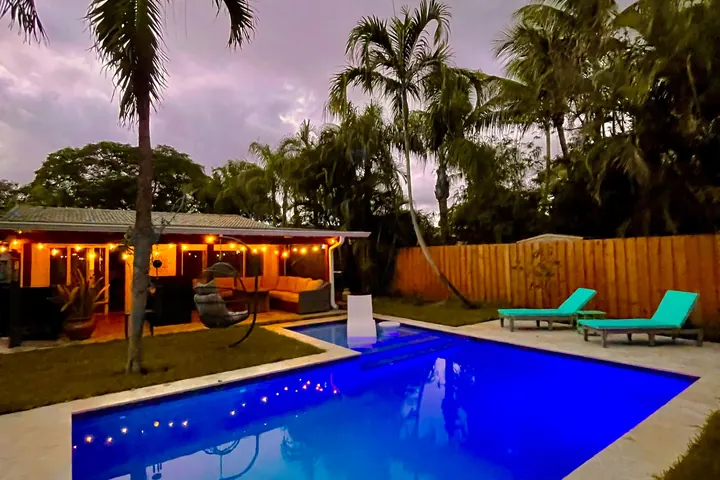
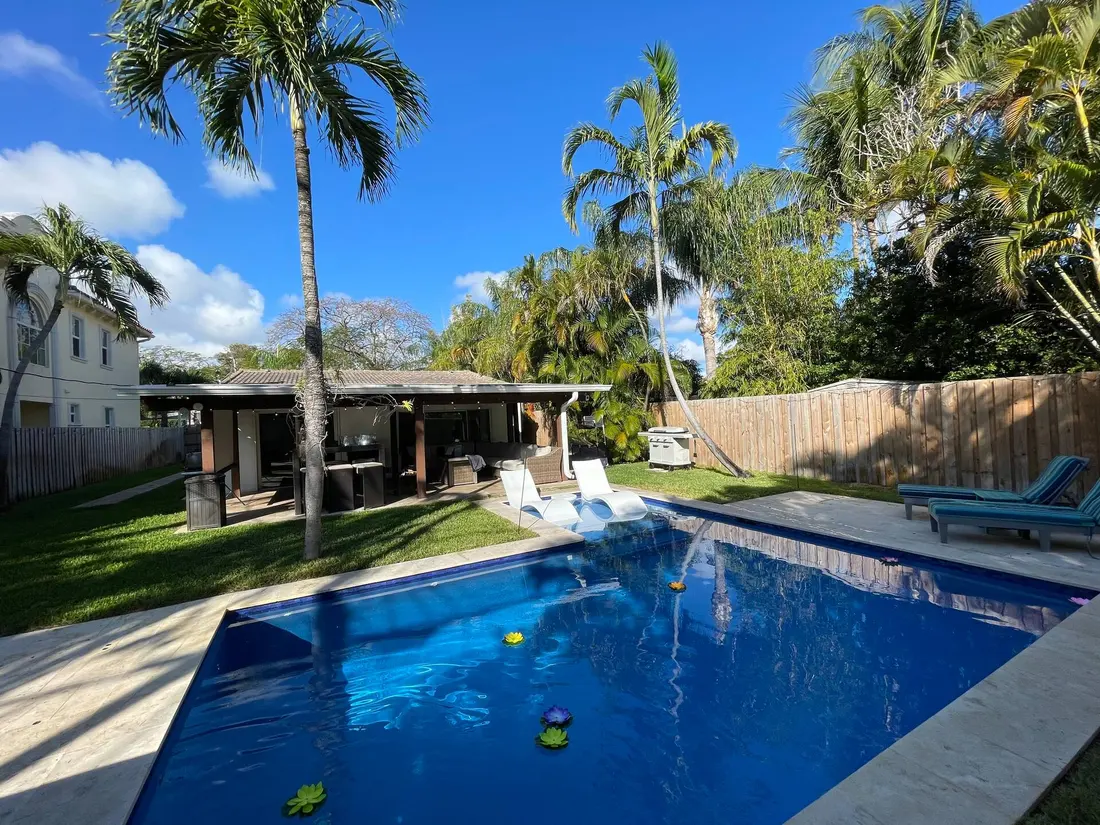
And the payoff is right in the backyard. After a hot morning on an exposed South Florida course, the short drive home ends at a private pool with a shallow sun shelf to cool off on, a fire pit for the evening, and a griddle for whatever you grill after. Book your tee time the night before, get up early, and save the rest of the day for the water. When you are ready to plan the trip, check dates and book the nest.
Questions people ask
How many golf courses are near Fort Lauderdale?
There are more than fifty courses in the Broward County area, most of them within about thirty minutes of downtown Fort Lauderdale. A large share are public daily-fee courses you can book without a membership.
What is the best-value public course to play?
Plantation Preserve, the City of Plantation's municipal course, is the reliable pick. It is a full-length par-72 layout through wetland preserves, about twenty minutes from the nest, with green fees that typically run in the $30 to $70 range depending on season and tee time.
Do I need to be a member to play?
No. Public daily-fee courses take anyone who books a tee time, and semi-private clubs sell open tee times to visitors, usually at a higher fee. Only fully private clubs require a member to get you on.
How much does a round cost?
It varies widely by course and season. Municipal courses can start around $30 in summer, while semi-private and upscale daily-fee courses can run well over $100 in peak winter. Always confirm the current rate when you book, and ask about twilight pricing.
When is the best time of day to tee off?
Early morning, especially from late spring through early fall. You beat the heat and the afternoon thunderstorms that build almost daily in summer, and you are back at the pool by lunch.
Where was Caddyshack filmed near Fort Lauderdale?
Much of the movie was shot at what is now Grande Oaks Golf Club in Davie, then called Rolling Hills, in the fall of 1979. The pool scene was filmed separately at Coral Ridge Country Club in Fort Lauderdale, which is private.
Is there anywhere to just hit balls without playing eighteen holes?
Yes. American Golfers Club in Fort Lauderdale is a short, mostly-par-3 course with a driving range, and Topgolf down in Miami Gardens is a multi-level range with food and drinks. Several municipal courses also open their practice ranges to non-players.
Can I rent clubs if I did not bring mine?
Most public courses rent sets, and there are local club-rental services that deliver to a course or to your door. If you want a specific set rather than whatever the pro shop has left, call ahead.
More Fort Lauderdale guides
 Photo: Tamanoeconomico, CC BY-SA 4.0Parks & outdoors
Hugh Taylor Birch State Park
A green ridge of old Florida between the city and the sea: trails, a paved loop, a paddling lake and beach access, ten minutes from the nest.
Read guide →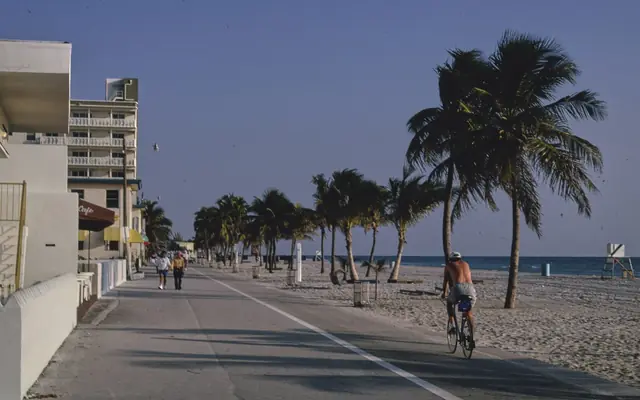 Photo: John Margolies, Public domainParks & outdoors
Cycling Fort Lauderdale
The best rides near the nest: the A1A beachfront path, the New River Greenway and the Las Olas loop, plus where to rent a bike.
Read guide →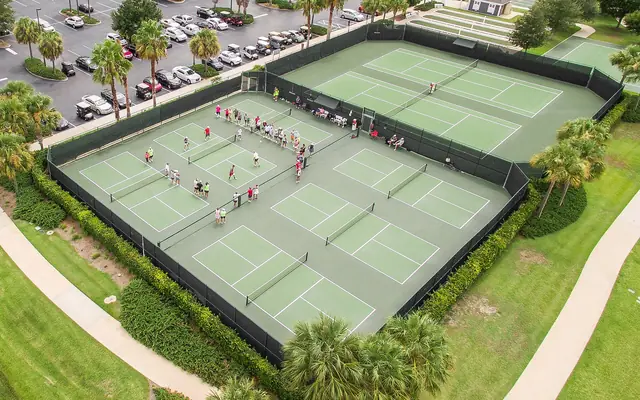 Photo: TheVillagesFL, CC BY-SA 4.0Parks & outdoors
Tennis & Pickleball
Play where champions trained: the Jimmy Evert Tennis Center and Holiday Park's pickleball courts, five minutes from the nest.
Read guide →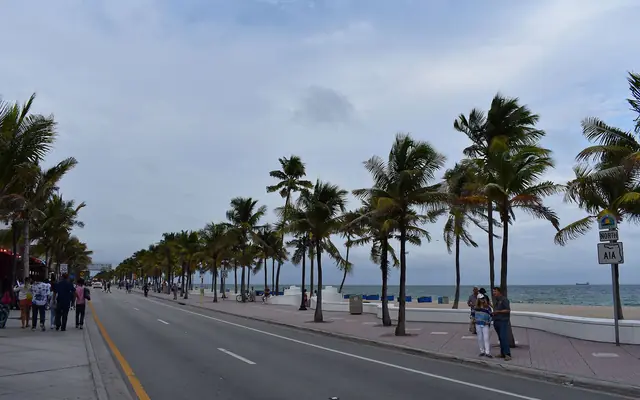 Photo: Tamanoeconomico, CC BY-SA 4.0Beaches & waterfront
Fort Lauderdale Beach & the Promenade
Fort Lauderdale's main public beach: the two-mile wave-wall promenade, where to park, and how to spend an easy day on the sand about ten minutes from the nest.
Read guide →Sources
We checked this guide against these sources in September 2026. Hours, prices and schedules change — confirm before you go.
- Plantation Preserve Golf Course & Club — City of Plantation
- Plantation Preserve — Visit Lauderdale
- East at Jacaranda Golf Club — GolfPass
- Greg Norman Signature Pines Course — Pompano Beach Golf
- Championship at Colony West Country Club — GolfPass
- Grande Oaks Golf Club — Troon
- Caddyshack filming locations — Local10
- Hollywood Beach Golf Club — Florida Historic Golf Trail
- American Golfers Club — GolfPass
- Topgolf Miami Gardens
- Golf Club at Trump National Doral — Miami and Beaches
Read it here. Live it from the nest.
A private pool, room for ten, and every one of these guides a short drive away.
Check Dates & Book