
Fort Lauderdale Beach & the Promenade
Fort Lauderdale's main beach and the two-mile wave-wall promenade: where to park, how to spend the day, and what to skip, about 10 minutes from the nest.
- Drive from the nestAbout 10 minutes
- WhereAlong A1A, main lot at 1100 Seabreeze Blvd
- Best forEasy beach days, walking, swimming, people-watching
- CostBeach is free; parking is paid
- ParkingBeach Park lot; pay by plate, card, or PayByPhone
- HoursOpen daily; check posted hours on site
- BringSunscreen, water, cash or the parking app
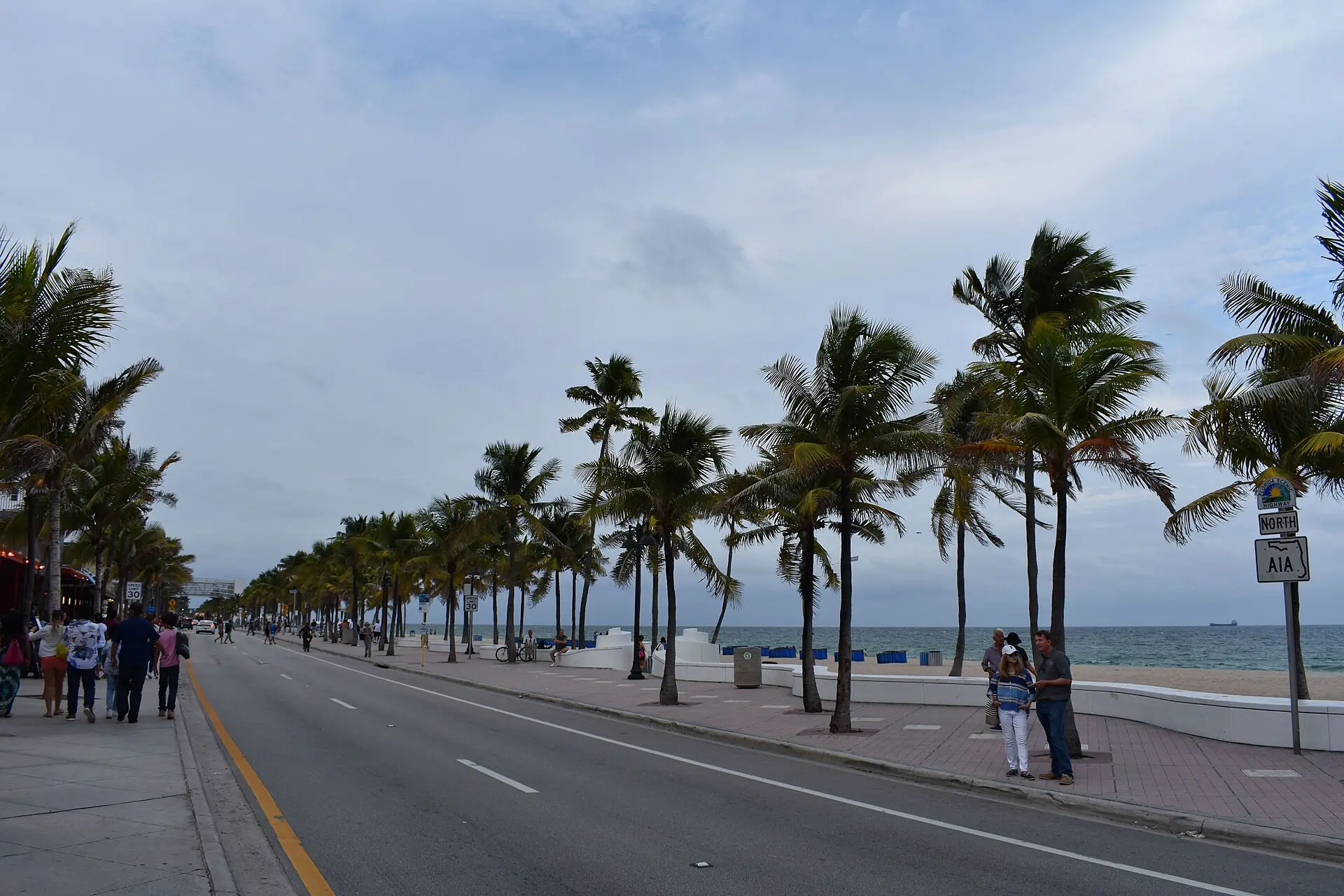
Photo: Las Olas Beach, South Fort Lauderdale Beach Boulevard by Tamanoeconomico, CC BY-SA 4.0, via Wikimedia Commons (cropped)
The stretch of sand along A1A is the postcard version of Fort Lauderdale, and it is about a ten-minute drive from the nest. You come for the wide, clean beach and stay for the promenade behind it: the white wave wall, the palms, and a two-mile ribbon of brick that runs the length of the shore.
What the beach is like
Fort Lauderdale Beach is the city’s main public shoreline, running along State Road A1A just east of downtown. The sand is broad, pale, and raked clean, backed for two miles by the low white barrier everyone calls the Wave Wall and a wide brick promenade. Across the road sit the hotels, cafes, and beach bars. It is an urban beach. You are steps from a cold drink and a bathroom the whole way, which is what makes it easy.
Because the nest sits just west of Victoria Park and the Intracoastal, you are close enough to treat this beach like your own backyard. Ten minutes in the car, or a longer walk or bike if you are up for it, and you are on the sand. That short hop is the whole point of staying where you are.
The most famous corner is where Las Olas Boulevard meets the beach. That is the historic heart of the strip, home to the Elbo Room, a beach bar that has been on that corner since 1938. You do not have to go in, but it is a useful landmark: when people say “the beach,” they usually mean the mile or so of sand on either side of that intersection.
The wave wall and promenade
The beachfront was rebuilt in the late 1980s, and the signature piece is the low, undulating white barrier known as the Wave Wall. It runs roughly two miles between A1A and the sand, shaded in places by coconut palms, with benches and public showers along the way. The same redesign gave A1A its planted medians and bike lanes, so joggers, cyclists, skaters, and walkers all share the path. It is a pleasant walk at any hour, and it is best early, before the sun is high.
Before that redesign, this strip was the spring-break capital you have seen in old movies, packed and rowdy and famous for it from the 1950s into the mid-1980s. The city rebuilt the beachfront to move past that reputation, and the calmer, cleaner promenade you walk today is the result. More recent work rebuilt a storm-battered section of A1A to hold up better against flooding, and the beach itself has been widened with trucked-in sand, so the shoreline is broader than it was a decade ago.
The promenade is the part locals use most. In the early morning it fills with runners and dog walkers; by evening it is couples, families, and people sitting on the wall watching the water. You can walk the whole two miles and back for a solid, flat hour of exercise, or just stroll a few blocks after dinner. There is no fee, no gate, and no closing time on the walkway itself.
Where to park
The main lot is at Fort Lauderdale Beach Park, 1100 Seabreeze Blvd, with several hundred spaces, EV charging, and no height restriction. It sits at the quieter south end of the strip near the Las Olas intersection, and it is the most reliable place to leave the car. The park around it has restrooms, outdoor showers, grills, picnic tables, a playground, and a volleyball court, so it works as a home base for the day.
Rates and hours shift, so check the signs when you arrive. The beach lots and street meters generally charge by the hour and take payment by license plate, card, or phone. Download the PayByPhone app before you go so you can top up your time from a lounger instead of walking back to the meter. Read the posted hours before you commit to a long evening, since the lot does close overnight.
On busy winter weekends and holidays, arrive before mid-morning or plan to circle for a while. The lots fill first at the popular Las Olas end. If you strike out there, the metered street spots along A1A and the garages a block or two back are your fallback.
A day on the sand
The beach itself is broad and well kept, with lifeguard stands, rentals for chairs and umbrellas, and easy access to cafes and bars across A1A when you want a break from the sun. It is a good beach for a long, unhurried day: swim, walk the promenade, grab lunch across the street, and head back. Chairs and umbrellas can be rented right on the sand, and some local companies will deliver beach gear to where you are staying if you would rather not haul it.
Here is the shape of a good beach day here:
- Arrive by mid-morning, park at the Beach Park lot, and set up on the sand south of Las Olas where it is a touch calmer.
- Swim and walk the promenade before the midday heat.
- Cross A1A for lunch or a cold drink when the sun gets high. The row of cafes and bars is right there.
- Back to the sand for the afternoon, or back to the nest for the pool if everyone is done.
- Return for a sunset walk on the promenade if you have the energy. The west-facing light hits the buildings rather than the water, but the evening crowd and the palms are the draw.
Check the flag color before you get in, because conditions change and the lifeguards fly the warning flags for a reason. Green means calm, yellow means moderate surf or current, and a single red flag means high hazard and swim at your own risk. Two red flags mean the water is closed, and a purple flag means marine life like jellyfish has been spotted. Rip currents are the real risk on this coast; if you get caught in one, swim parallel to the shore rather than fighting straight back in.
What to bring
This is an urban beach, so you can travel light and buy what you forget. Still, a little prep saves money and hassle:
- Reef-safe sunscreen, and more than you think. The Florida sun is stronger than it feels in the breeze.
- Water. It is easy to buy across the street, but bring your own to start.
- A phone charged with the PayByPhone app set up, plus a card for parking.
- A hat, sunglasses, and a light cover-up for the walk back across hot pavement.
- A small cooler if you want your own snacks. The Beach Park has grills and picnic tables if you want to make a thing of it.
- Water shoes or sandals for the hot sand at midday.
How it compares to the other beaches
Fort Lauderdale Beach is the flagship, but it is not the only sand within easy reach. Here is the quick comparison for the three closest options.
| Beach | Character | Best for |
|---|---|---|
| Fort Lauderdale Beach & Promenade | Wide, lively, urban; the wave wall and cafes across A1A | The classic beach day, walking, easy food and drink |
| Las Olas & Oceanside Park | The nearest sand, a modern park with shade and a rooftop | A quick, low-fuss beach hour close to the strip |
| Lauderdale-by-the-Sea | Quieter town beach with a reef close to shore | Snorkeling and a slower, small-town feel |
If you want the shortest possible trip to sand, read our guide to Las Olas and Oceanside Park. If you want to see fish, the reef at Lauderdale-by-the-Sea is 15 to 20 minutes north and worth the drive. And for a car-free brick path lined with cafes, the Hollywood Beach Broadwalk is south of the airport.
Food and drink across the street
One of the best things about this beach is that you never have to go far to eat. The row of cafes, bars, and casual spots along A1A faces the sand, so lunch is a matter of crossing the road. It runs from grab-a-slice casual to sit-down seafood, and the Las Olas corner has the densest cluster. The Elbo Room on that corner is the old-school beach bar with live music most of the day if you want the historic, loud version.
For a proper sit-down meal, walk or drive a few minutes inland. Las Olas Boulevard is minutes away and stacked with restaurants, galleries, and shops. See our Las Olas Boulevard guide for where to eat and browse. If you want to be on the water while you eat, the city’s waterfront restaurants are a short hop up and down the Intracoastal.
Pairing the beach with the rest of your day
A beach morning leaves your afternoon open, and this end of the city gives you a lot within a few minutes. The water taxi has a stop near the beach, so you can trade the car for a boat and hop between the beach, downtown, and the restaurants along the Intracoastal. It is a fun way to see the city from the water. Families with kids in tow can pair a beach morning with the hands-on exhibits at the Museum of Discovery and Science downtown when everyone has had enough sun.
If you would rather stay outside, the promenade connects to good cycling. Fort Lauderdale is flat and bike-friendly, and the A1A bike lanes let you ride the coast; our cycling guide covers the routes. Just north of the main strip, Hugh Taylor Birch State Park gives you a shaded, green counterpoint to the open beach, with a lagoon for paddling and trails a short walk from the sand.
When to go
The beach is open and usable year-round, but the experience changes a lot by season. Winter and early spring, roughly December through April, is the dry, mild peak, with comfortable temperatures, low humidity, and the biggest crowds and highest prices. Late spring and early summer bring warmer water and thinner weekday crowds. Summer is hot and humid with near-daily afternoon thunderstorms that usually blow through quickly, so mornings are the play. The heart of hurricane season runs late summer into fall, and while a direct hit is rare on any given day, that is when the ocean is most likely to be rough and the flags red.
Whatever the season, mornings are the sweet spot: cooler sand, calmer water, easier parking, and better light. Afternoons in summer often end in a storm. For a fuller breakdown, see our guide to the best time to visit Fort Lauderdale.
Before you go
- Hours, parking rates, and lifeguard schedules change seasonally. Read the posted signs when you arrive rather than trusting an old number.
- The Las Olas end is the busiest and fills first. Head a few blocks north or south for more room and easier parking.
- Rip currents are the real hazard here. Swim near a lifeguard stand, watch the flags, and keep kids close.
- Shade is limited on the open sand. Rent an umbrella, bring one, or take breaks under the palms along the wall.
- Afternoon summer storms are common and fast. If the sky darkens and you hear thunder, get off the sand and out of the water.
- It is a short trip from the nest, so you never have to overpack or overstay. Two shorter visits often beat one long, hot slog.
Back at the nest
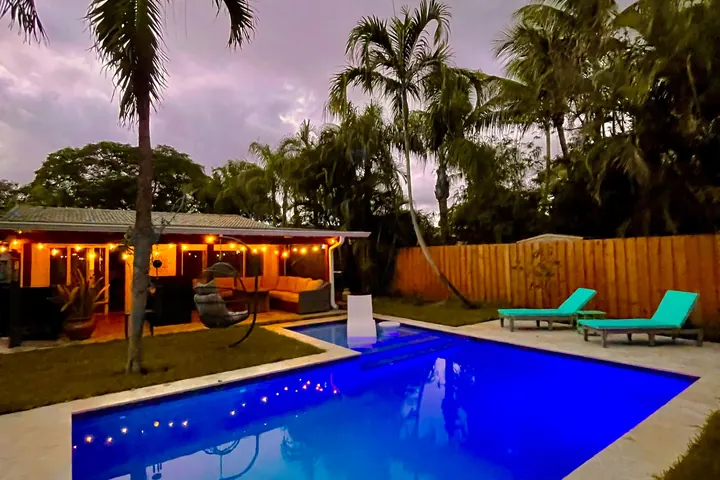
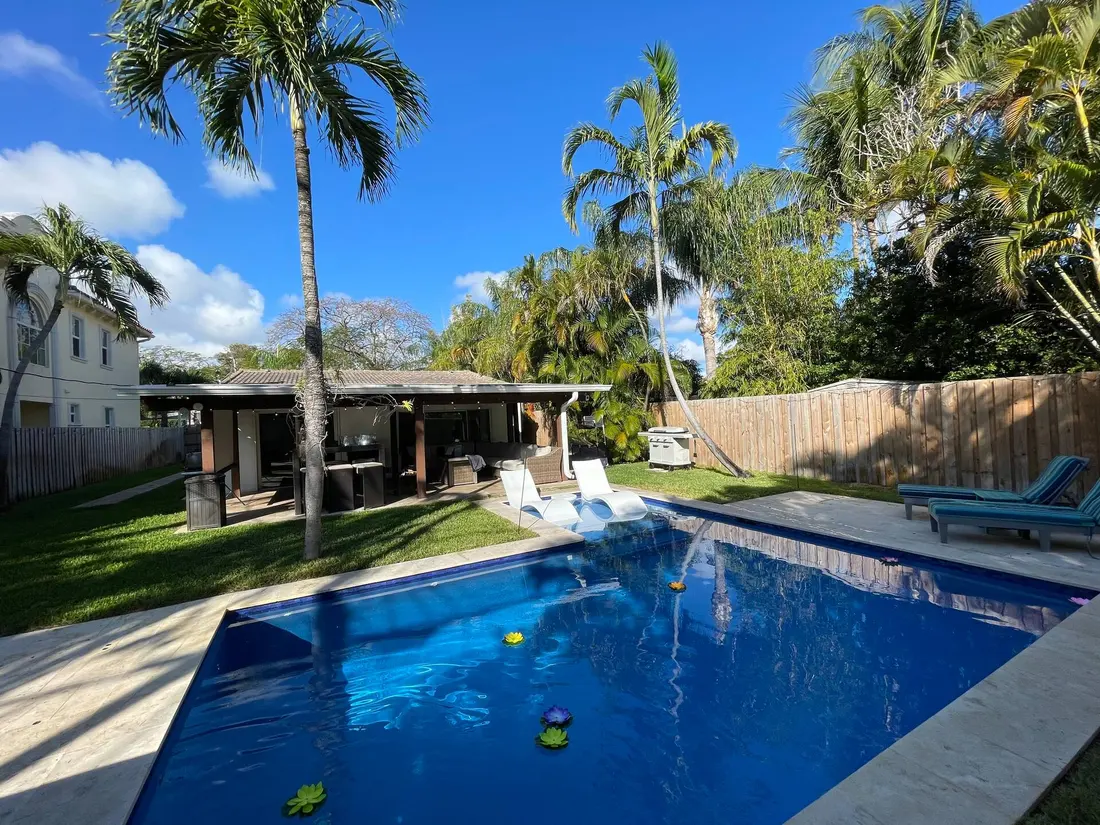
The best part of staying this close is that you do not have to make a full day of it. Come home to the pool when the beach gets crowded, rinse off, and go back for the evening if you want to. The private pool has a shallow sun shelf for the little ones, a fire pit for after dark, and a griddle for a beach-day dinner, so the sand is a place you visit rather than a place you have to squeeze everything into. Ten minutes each way buys you that flexibility.
When you have had your fill of the beach, the rest of the city is just as close. Wander Las Olas Boulevard for dinner and shopping, or spend a slow morning over breakfast and brunch before you point the car back toward the sand.
Questions people ask
How far is Fort Lauderdale Beach from Turtle Nest Bungalow?
It is about a ten-minute drive. The nest sits just west of Victoria Park and the Intracoastal, so you can easily go back and forth between the beach and the pool in a single day.
Where should I park at Fort Lauderdale Beach?
The main lot is Fort Lauderdale Beach Park at 1100 Seabreeze Blvd, with several hundred spaces, EV charging, and no height limit. Street meters and garages a block back are good fallbacks on busy days.
How much does parking cost?
Beach lots and meters generally charge by the hour, and rates change, so check the posted signs when you arrive. You can usually pay by plate, card, or the PayByPhone app. The beach itself is free.
Is Fort Lauderdale Beach good for swimming?
Yes, on calm days. Always check the lifeguard flag first: green is calm, yellow is moderate, red means high hazard, and double red means the water is closed. Rip currents are the main risk, so swim near a stand.
Can I rent chairs and umbrellas on the beach?
Yes. Chairs and umbrellas are available to rent right on the sand, and some local companies will deliver beach gear to where you are staying. Shade is limited otherwise, so it is worth it midday.
What is the Wave Wall?
It is the low, curving white barrier that runs about two miles between A1A and the sand, part of a late-1980s beachfront redesign. Alongside it is a wide brick promenade used by walkers, runners, and cyclists at all hours.
What is the best time of day to go?
Mornings. The sand is cooler, the water is calmer, parking is easier, and the light is best. In summer, afternoons often end in a fast thunderstorm, so plan the beach for early in the day.
Where can I eat near the beach?
The row of cafes and bars along A1A faces the sand, so lunch is just across the road. For a fuller meal, Las Olas Boulevard is minutes away with many restaurants, and waterfront spots line the nearby Intracoastal.
More Fort Lauderdale guides
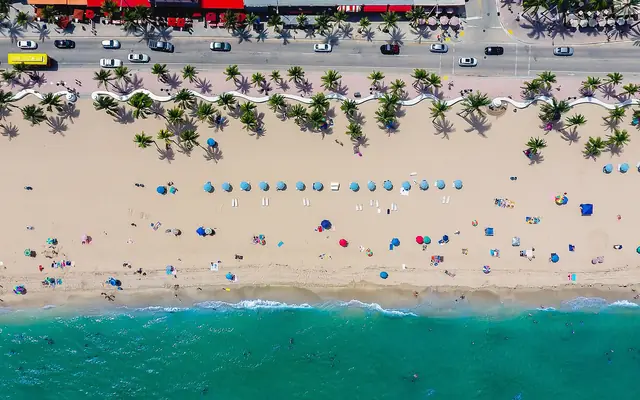 Photo: Lance Asper lance_asper, CC0Beaches & waterfront
Las Olas Beach & Oceanside Park
The closest beach to the nest, where Las Olas Boulevard meets the ocean: a shaded park lawn, the beach garage, and easy sand without the long walk.
Read guide →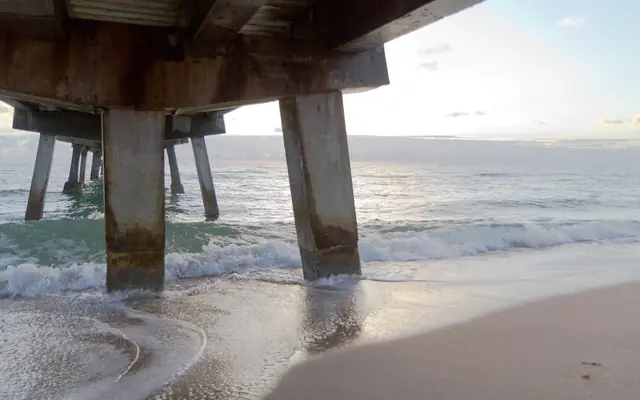 Photo: DaSpader, CC BY-SA 3.0Beaches & waterfront
Snorkeling at Lauderdale-by-the-Sea
One of Florida's best shore snorkels sits fifteen minutes north: living reef within a hundred yards of the sand, a shipwreck trail off Datura Avenue, and a walkable beach town.
Read guide →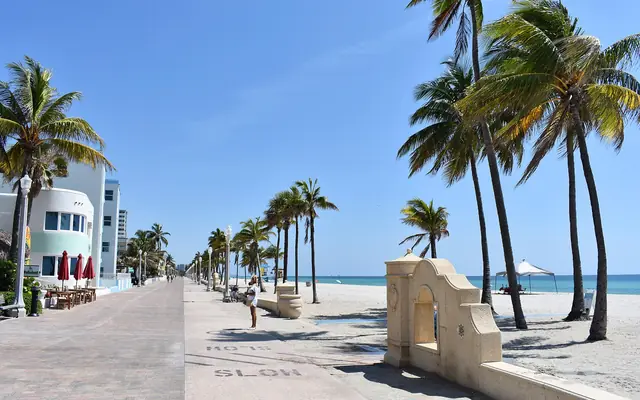 Photo: Tamanoeconomico, CC BY-SA 4.0Beaches & waterfront
Hollywood Beach & the Broadwalk
A brick promenade, beachfront cafes and an old-Florida feel, about twenty-five minutes south: how to spend a half-day on the Hollywood Broadwalk.
Read guide →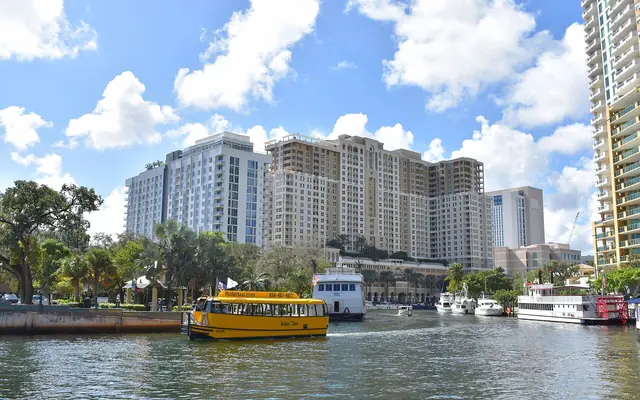 Photo: Tamanoeconomico, CC BY-SA 4.0On the water
The Fort Lauderdale Water Taxi
How the hop-on, hop-off Water Taxi works: the all-day pass, the stops worth using, and why it is the most fun way to see the canals and the Intracoastal.
Read guide →Sources
We checked this guide against these sources in September 2026. Hours, prices and schedules change — confirm before you go.
Read it here. Live it from the nest.
A private pool, room for ten, and every one of these guides a short drive away.
Check Dates & Book