
The Florida Keys & Key West
How to do the Florida Keys and Key West from Fort Lauderdale: the Overseas Highway, the best stops, drive vs bus tour, and when to go.
- Drive from the nestAbout 4 hours each way to Key West
- DistanceRoughly 180 miles to Key West
- The roadOverseas Highway (US-1), 42 bridges to MM 0
- Best forA road trip, reefs, and Old Town Key West
- Do it inOne long day, or better, an overnight
- Best timeNov–April dry season; watch hurricane season
- CostVaries with gas and parking, or a set tour price
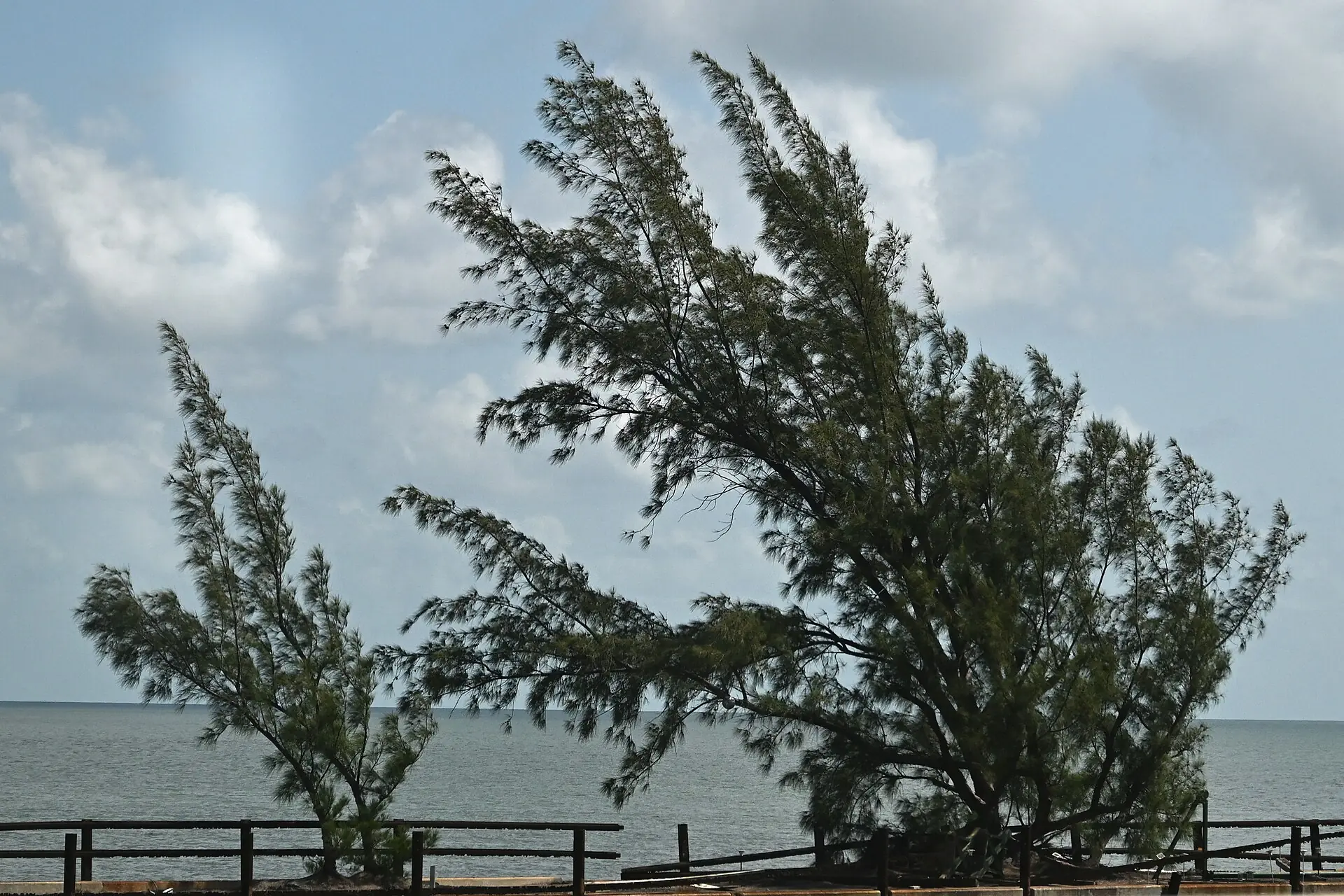
Photo: Fred the Tree 2025-05-18 by Schwerdf, CC BY 4.0, via Wikimedia Commons (cropped)
The drive down the Florida Keys is one of the great American road trips, and it starts in your direction. A string of islands trails off the tip of the mainland, linked by a single highway that runs right out over open water. You can do the whole thing to Key West and back in one very long day, but the Keys reward a slower pace, and the smartest move is often to pick one stretch and do it well.
The drive
From Fort Lauderdale, Key West is about a hundred and eighty miles and roughly four hours each way without stops. You head south to Florida City, the last real town on the mainland, and join the Overseas Highway, US-1, which runs about a hundred and thirteen miles over forty-two bridges before reaching Key West at Mile Marker 0. Along the way you pass Key Largo, Islamorada and Marathon, and cross the famous Seven Mile Bridge near Marathon at roughly Mile Marker 47.
The highway is the point. For long stretches it is a two-lane road with water on both sides, the Atlantic to the left and the Gulf of Mexico to the right, and there is nowhere else quite like it. It is also, in places, a slow road: one lane each way, one stalled truck, and everyone behind waits. Build that into your thinking. Four hours is the clean-run number, and on a busy winter Saturday it can run longer.
The Keys don't use street addresses so much as mile markers. Small green signs count down from about MM 126 at the mainland entry to MM 0 in Key West, and locals give directions that way: "we're at MM 82, bayside." Bayside means the Gulf side and oceanside means the Atlantic. Once you learn to read the markers, the whole chain makes sense.
Do it in a day, or don't
A one-day round trip to Key West is possible if you leave at dawn and accept a lot of time behind the wheel: eight hours of driving bookending a few hours at the far end. It can be a great day. It can also be a blur. Be clear with yourself about which kind of traveler you are before you commit ten people to it.
Guided bus and van tours run daily from the Fort Lauderdale area and take the driving off your plate. They typically leave early, stop in Key Largo for a break, and give you around six hours of free time in Key West before the ride back, with the whole day running roughly twelve to fifteen hours door to door. Prices, pickup points and timings change, so check current details when you book. For a group that just wants to see Key West without anyone stuck at the wheel, it is a reasonable trade.
Here is the case for slowing down, though. The drive begs for stops: a snorkel at John Pennekamp in Key Largo, a fish sandwich in Islamorada, a swim at Bahia Honda. If you can spare a night, the Keys open up. You get sunset and sunrise, an easy dinner, and none of the round-trip fatigue. If a night isn't in the cards, consider not driving all the way to Key West at all. Key Largo and Islamorada are close enough for a genuinely relaxed day trip, and you skip the longest, most tiring miles.
How the Keys are laid out
Think of the drive as four acts, each with its own character. Knowing them helps you choose where to spend your hours instead of trying to see everything and seeing very little.
| Stretch | Mile markers | What it's known for |
|---|---|---|
| Key Largo | MM 106–90 | John Pennekamp Coral Reef State Park; snorkeling and glass-bottom boat trips; the closest true Keys stop to home |
| Islamorada | MM 90–73 | Sportfishing, art galleries, waterfront fish houses, tarpon feeding at Robbie's |
| Marathon & the Middle Keys | MM 65–40 | The Turtle Hospital, the Seven Mile Bridge, family beaches, Bahia Honda just beyond |
| Key West | MM 5–0 | Old Town, Duval Street, Mallory Square, the Southernmost Point, the end of the road |
Key Largo and John Pennekamp
Key Largo is the first island you reach and the easiest to fold into a day trip, since it starts a little over an hour past Florida City. The headline here is John Pennekamp Coral Reef State Park, the country's first undersea park, which protects a slice of the only living coral barrier reef in the continental United States. The reef itself sits a few miles offshore, so the way you see it is by boat.
The park runs snorkeling trips and glass-bottom boat tours out to the reef, along with kayak and paddleboard rentals and a couple of small swimming beaches near the entrance. The park is generally open from 8 a.m. to sunset year-round, with a per-vehicle entry fee plus a small per-person charge. Boat tours run on set daily schedules and fill up, especially in winter, so reserve ahead and confirm times and current fees before you drive down, since hours, tour slots and any facility work can change seasonally.
Islamorada
Past Key Largo the road runs through Islamorada, a cluster of islands that bills itself as the sportfishing capital of the world and generally feels like the polished middle of the Keys. This is a good place to break a longer drive. The waterfront fish houses here are the real thing. You order at a window, sit at a picnic table over the water, and eat whatever came off the boats. A fish sandwich and a cold drink with your feet near the Gulf is the Islamorada experience in one sitting.
Two easy stops sit right off the highway. Robbie's, on the bayside, is where you buy a bucket of small fish and hand-feed the enormous tarpon that patrol the dock, a genuine hit with kids and a fun few dollars for everyone else. And the Morada Way arts district, around Mile Markers 81 to 82, clusters galleries and places to eat if you want to stretch your legs somewhere that isn't a parking lot.
Marathon, the Seven Mile Bridge and Bahia Honda
Marathon and the Middle Keys are the drive's dramatic center. Just past town the road climbs onto the Seven Mile Bridge, the longest span on the highway and the moment most people remember: open water in every direction, the old railroad bridge running alongside, and nothing but the road ahead. Keep your eyes up and let a passenger take the photos.
Marathon itself is more workaday and family-friendly than Islamorada. The Turtle Hospital here rehabilitates injured sea turtles and runs guided tours where you can see the patients up close. It is a standout stop with kids, though tours are timed and can sell out, so check ahead. Just south of the Seven Mile Bridge, Bahia Honda State Park has some of the best beaches in the entire chain: shallow, clear water and real sand, which is rarer in the Keys than you'd expect. If your day trip is really about swimming and beach time, Bahia Honda is worth the drive on its own.
Key West: the end of the road
At Mile Marker 0 the highway simply stops, and you're in Key West, a small, dense, walkable old town that feels more like a Caribbean port than the rest of Florida. If you drive down, park once and explore on foot. Old Town is compact, and circling for a spot in a car you no longer need is a waste of your limited hours. Here is a sensible loop if you have an afternoon and evening.
- Duval Street. The main artery of Old Town runs a little over a mile from the Gulf to the Atlantic, lined with bars, galleries, shops and restaurants. Walk it once to get your bearings, then duck off it for anything quieter.
- The Southernmost Point. The big painted concrete buoy marking the southernmost point of the continental United States, ninety miles to Cuba, is the classic photo. Expect a line, but it moves.
- The Hemingway Home. Ernest Hemingway's former house is a National Historic Landmark, and the descendants of his six-toed cats still roam the grounds. A calm, shady counterpoint to the street.
- The Truman Little White House. In the Truman Annex, this was President Truman's winter retreat and is now a house museum, a good stop for history-minded travelers.
- Mallory Square at sunset. The nightly Sunset Celebration draws buskers, food carts and a crowd to the waterfront to watch the sun drop into the Gulf. It starts a couple of hours before sunset and runs most nights, weather permitting. It's free, so tip the performers you enjoy.
If you're on a bus tour with roughly six hours, don't try to do all of that. Pick two or three and leave time to just wander and eat. The pleasure of Key West is in the streets themselves: the tin roofs, the porches, the roosters that genuinely run wild everywhere.
Drive yourself, or take a tour
Both work. The right choice comes down to your group and how much of the day you want to control.
| Drive yourself | Guided bus tour | |
|---|---|---|
| Freedom | Total: stop anywhere, leave when you want | Fixed schedule and route |
| Effort | Around 8 hours of driving in a day trip | None: someone else drives |
| Stops along the way | Pennekamp, Islamorada, Bahia Honda, your call | Usually one rest break; the point is Key West |
| Best for | Families who want beaches and their own pace | Anyone who just wants to see Key West car-free |
| Cost feel | Gas and parking; flexible | A set per-person price; check current rates |
With a full house of ten, doing your own driving in two vehicles often beats a bus. You can split up, some to the beach and some to town, and you're not tied to a departure horn. For a couple or a small group without a car handy, the tour is the simpler answer.
When to go
The Keys have a clear high season and a clear off season, and the weather drives both. Roughly November through April is the dry, warm, comfortable stretch, and the busiest, with winter visitors filling the islands and prices to match. March through May is the shoulder sweet spot, with warm water, sunny days, and thinner crowds as the winter residents head north.
Summer is hot, humid and prone to afternoon storms, but the water is bathtub-warm and mornings can be gorgeous. The real caveat is hurricane season, which runs June through November and peaks in September and October. A named storm anywhere near the Keys can close the highway or the parks with little notice, so watch the forecast and keep plans flexible if you travel in those months. For the wider picture on timing your whole Fort Lauderdale trip, see our guide to the best time to visit Fort Lauderdale.
What to bring and how to plan the day
A Keys day is an outdoor day. A little packing goes a long way, especially with a group.
- Reef-safe sunscreen, hats and sunglasses, since the sun on open water is relentless
- Water and snacks in the car; stretches between towns have few services
- Swimsuits and a towel each, even if you're "just driving down," because you'll want to swim
- A light layer for the ride home after sunset
- Cash for tips at Mallory Square and small stands
- A full tank before you leave Florida City, and top up when you can, since gas is pricier and stations thinner down-island
- Reservations for any boat tour or the Turtle Hospital, booked ahead
Give yourself margin. Leave at dawn to clear Miami traffic, don't overschedule, and let the road be the highlight rather than a checklist to conquer. If a stop looks good and you have the time, take it. That's the whole spirit of the drive.
Back at the nest
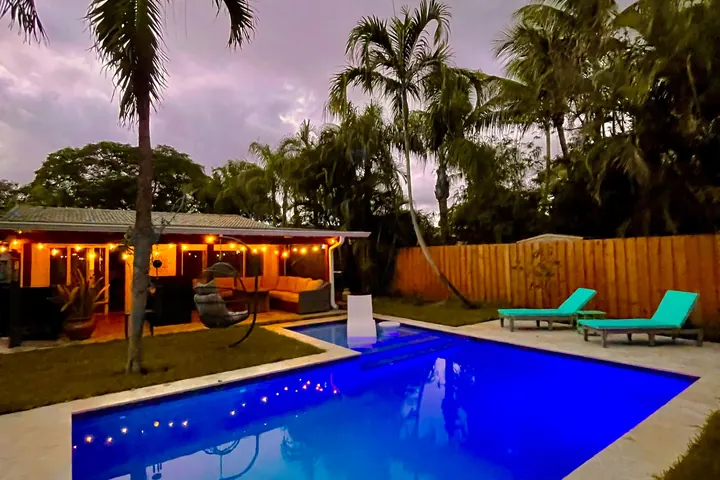
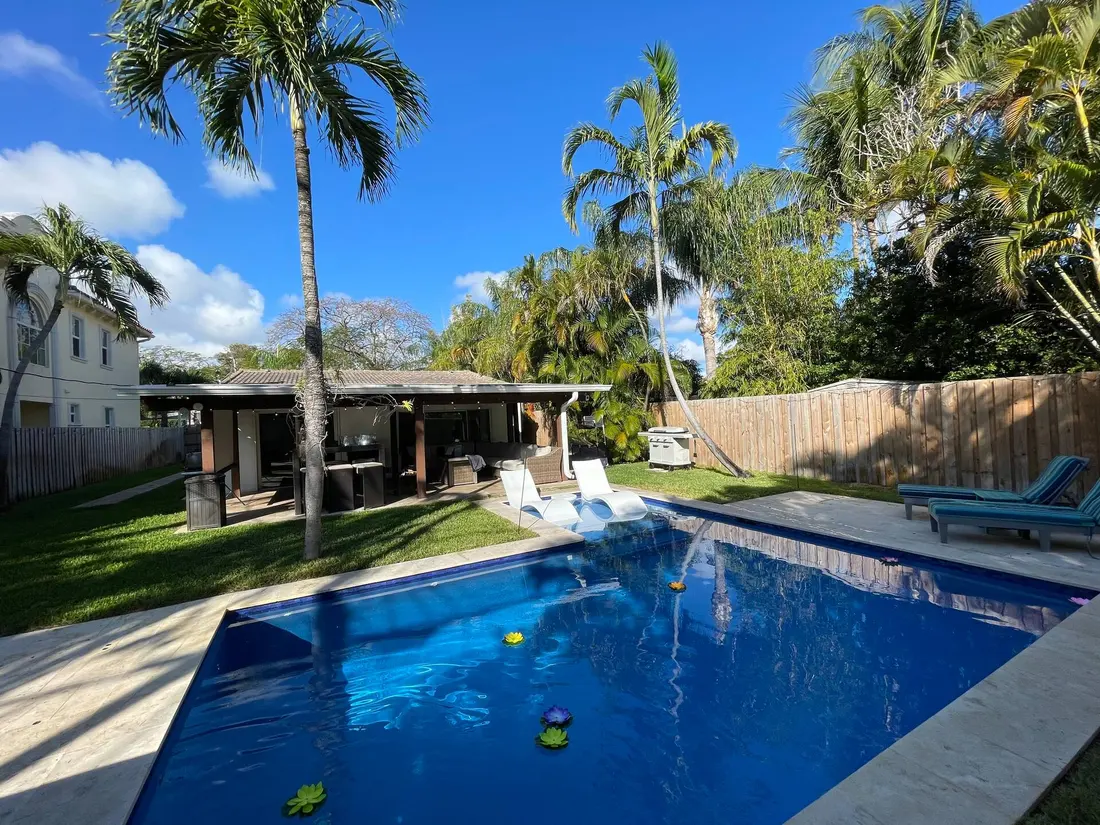
A Keys day is a big one, whichever way you do it, so it pairs well with a home base that lets you collapse when you get back. Turtle Nest Bungalow sits in the quiet Lakeridge area just west of Victoria Park, with a private pool, a shallow sun shelf and a fire pit waiting for you at the end of a long drive. Come home salt-crusted and tired, rinse off, and let the pool do the rest. There's no better recovery from four hours of Overseas Highway than a slow evening in the water.
It also makes a smart launch pad. FLL is about fifteen minutes away if you're timing an early start, and the house sleeps ten, so the whole group can roll out together at dawn. If the full Key West haul feels like too much, the nest puts easier day trips within reach too: a shorter run to a Miami day trip, an Everglades airboat tour out west, or a genteel drive up to Palm Beach. And if all you really wanted from the Keys was clear water and a reef, you can get a taste far closer to home with the shore snorkeling at Lauderdale-by-the-Sea. Whatever you choose, the pool is here when you get back. Check dates and book the nest.
Questions people ask
Can you really do Key West as a day trip from Fort Lauderdale?
Yes, but it's a big day, with about four hours of driving each way. Leave at dawn, keep your Key West plans short, and expect to be tired on the way home. Many people prefer to overnight or to stop at Key Largo or Islamorada instead.
How long is the drive?
Key West is roughly 180 miles and about four hours from Fort Lauderdale without stops. Winter traffic and the two-lane stretches of the highway can push that longer, so pad your timing.
Should I drive myself or take a bus tour?
Driving gives you total freedom to stop for beaches and reefs at your own pace, which suits families. A guided bus tour takes the wheel time off your hands and usually gives around six hours in Key West. For a group of ten with cars, driving is often the better call.
What are the best stops along the way?
John Pennekamp Coral Reef State Park in Key Largo for snorkeling, the waterfront fish houses and tarpon feeding in Islamorada, the Turtle Hospital and Seven Mile Bridge around Marathon, and Bahia Honda State Park for the best beaches in the chain.
What is there to do in Key West itself?
Walk Duval Street, photograph the Southernmost Point buoy, tour the Hemingway Home or the Truman Little White House, and catch the nightly Sunset Celebration at Mallory Square. Old Town is small and walkable, so park once and explore on foot.
When is the best time to go?
November through April brings the driest, most comfortable weather but the biggest crowds. March through May is a quieter sweet spot. Hurricane season runs June to November and peaks in September and October, so watch the forecast in those months.
Do I need reservations?
For boat tours at John Pennekamp and for the Turtle Hospital tours, yes. Book ahead, especially in winter, and confirm times before you drive down. Hours and schedules can change seasonally.
Is the drive good for a shorter, easier day?
Absolutely. Key Largo and Islamorada are close enough for a relaxed day trip with clear water and good food, and you skip the longest, most tiring miles to Key West. It's the smart move if you don't want to overnight.
More Fort Lauderdale guides
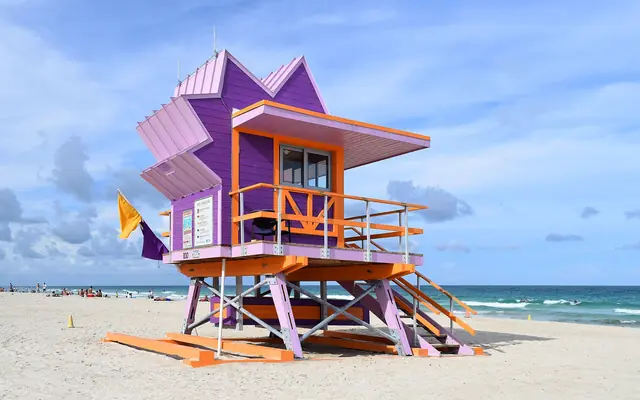 Photo: Radomianin, CC BY-SA 4.0Day trips
A Day Trip to Miami
Miami is thirty minutes away, and the train makes it easy: Wynwood murals, South Beach Art Deco and Vizcaya, without the parking headache.
Read guide →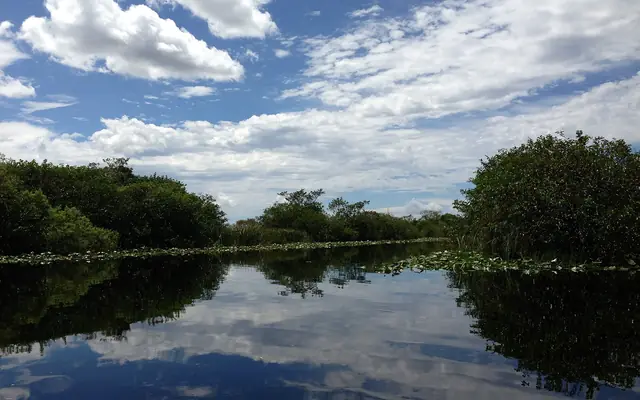 Photo: Jacklee, CC BY-SA 4.0Day trips
Everglades Airboat Tours
The River of Grass is thirty minutes west: where to take an airboat ride, see wild alligators and meet the gator handlers near Fort Lauderdale.
Read guide →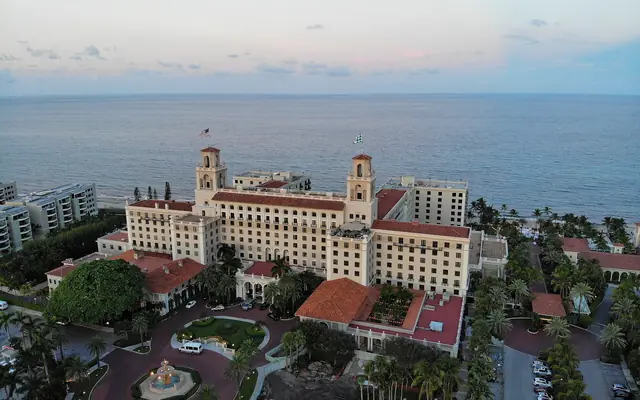 Photo: Rich Andrews, CC BY-SA 4.0Day trips
A Day Trip to Palm Beach
Gilded-Age mansions, Worth Avenue shopping and The Breakers, thirty minutes north by train: the polished, easy day trip from Fort Lauderdale.
Read guide →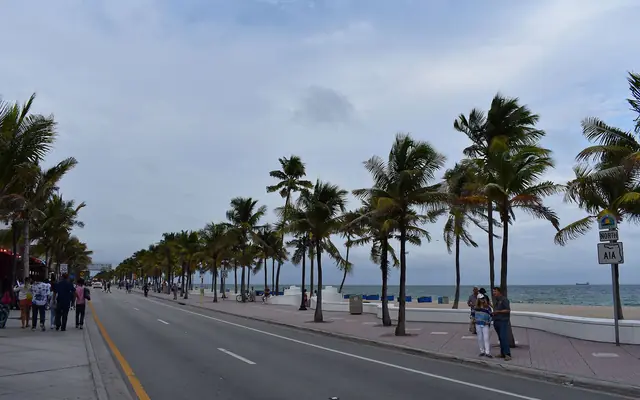 Photo: Tamanoeconomico, CC BY-SA 4.0Beaches & waterfront
Fort Lauderdale Beach & the Promenade
Fort Lauderdale's main public beach: the two-mile wave-wall promenade, where to park, and how to spend an easy day on the sand about ten minutes from the nest.
Read guide →Sources
We checked this guide against these sources in September 2026. Hours, prices and schedules change — confirm before you go.
Read it here. Live it from the nest.
A private pool, room for ten, and every one of these guides a short drive away.
Check Dates & Book